PlateMate

Automated Dietary Guide

UX/UI Design

AI Design

Product Design

Timeline

Sep 2025 - Dec 2025

MY ROLE

UX/UI Designer

team

Samantha Mirabella, Sharon Ou, Yashini Ravindran, Madhushree Ghosh
Background

What is Automation?

We started with a simple question: "What is automation?"

It’s something people talk about everywhere right now. We were curious how automation actually connects to everyday life, and what kind of impact it has on people. That curiosity became the starting point of this project.

Ideation

Brainstorming

To better understand it, we brainstormed what automation means to us: speeding up processes, reducing repetitive tasks, improving efficiency, using AI, minimizing human error, adapting to user needs, completing tasks independently, and being flexible and responsive.

Ideation

Brainstorming

From there, we explored different problem spaces and potential solutions across areas like environment, finance, business operations, and health & safety.

We found ourselves most drawn to the health space. As we went deeper, we focused on topics like dieting, dietary restrictions, digital health records, health habits, and nutrition.

This led to the concept of PlateMate, with the slogan “Eat with confidence.”
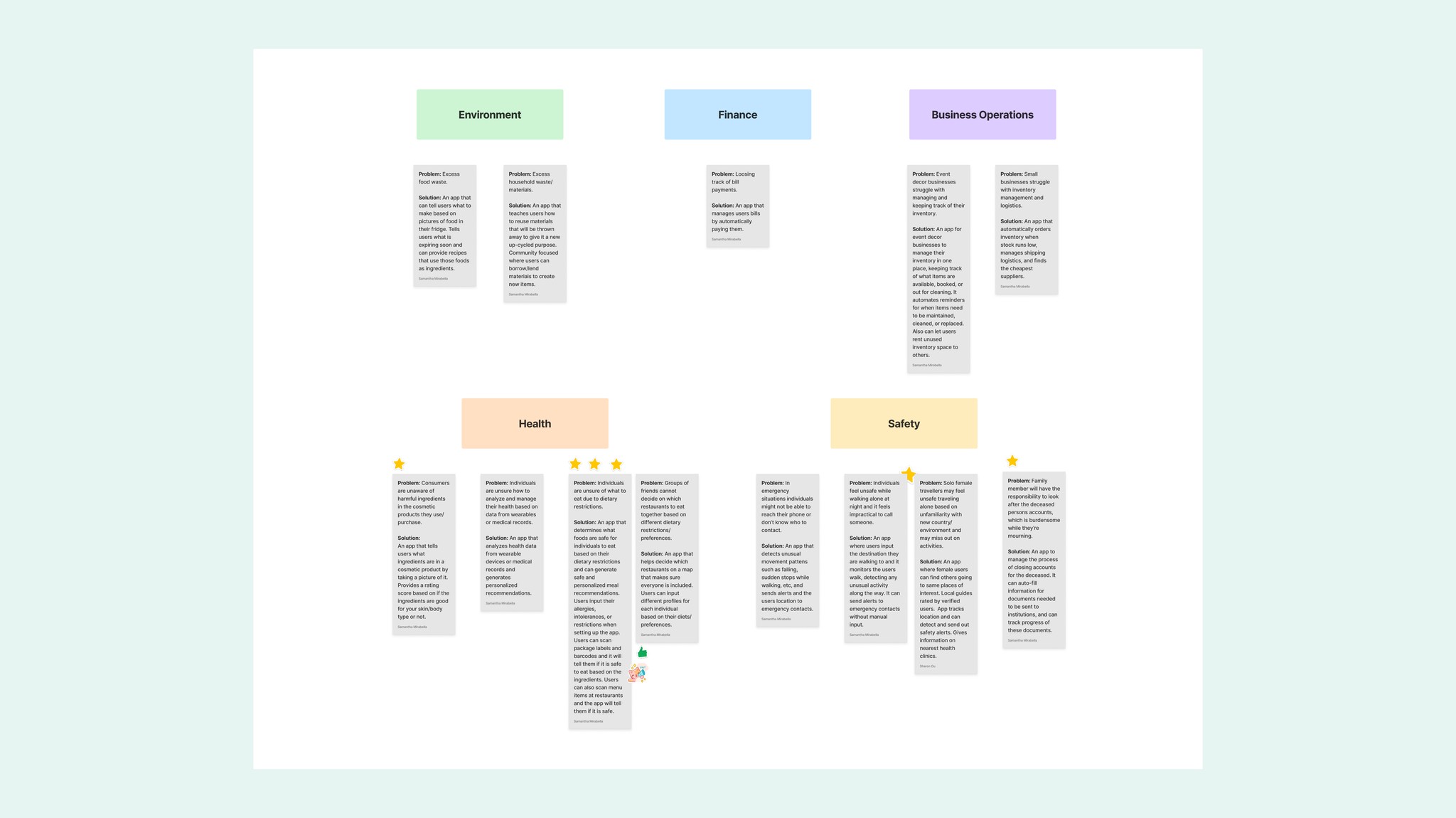
Initial Problem Statement

Problem Statement

Individuals with different dietary needs, restrictions, health conditions, or lifestyle goals struggle to find tailored nutrition guidance.

Many individuals struggle to make confident food choices due to complex ingredient labels, unclear menus, and diverse dietary needs or goals. This often leads to stress, uncertainty, and potential health risks.

Research & Analysis

Key Findings

01

Lack of Guidance, Leads to Risk

1/2 of Canadians report difficulty understanding or using nutrition labels effectively (Canadian Foundation for Dietetic Research, 2018).

02

Food Choices Are Uncertain

25–35% of Canadians order takeout or delivery on a weekly basis, although rising food costs (Statista, 2023-2025).

03

Apps Aren’t Truly Personalized

AI-based systems show strong potential to help prevent allergic reactions and can scale into user-friendly solutions across different environments (Rodriguez-Alonso et al., 2025).

04

Market are breaking in specific usages like calories, recipes, allergies.

Research & Analysis

Key Findings

01

Lack of Guidance, Leads to Risk

1/2 of Canadians report difficulty understanding or using nutrition labels effectively (Canadian Foundation for Dietetic Research, 2018).

02

Food Choices Are Uncertain

25–35% of Canadians order takeout or delivery on a weekly basis, although rising food costs (Statista, 2023-2025).

03

Apps Aren’t Truly Personalized

AI-based systems show strong potential to help prevent allergic reactions and can scale into user-friendly solutions across different environments (Rodriguez-Alonso et al., 2025).

04

Market are breaking in specific usages like calories, recipes, allergies.

Research & Analysis

User Need

We went through the user personas to spot the user pain points and key needs.

01

Simple explanations and trustworthy interpretation of ingredients to make decision.

02

Confidence when eating out and recommendations that match diet, goals and preferences.

03

A platform that adapts user's lifestyle, habits and progress.

04

All in one app that handles restrictions, goals and real-life decisions.
Research & Analysis

Opportunities Features

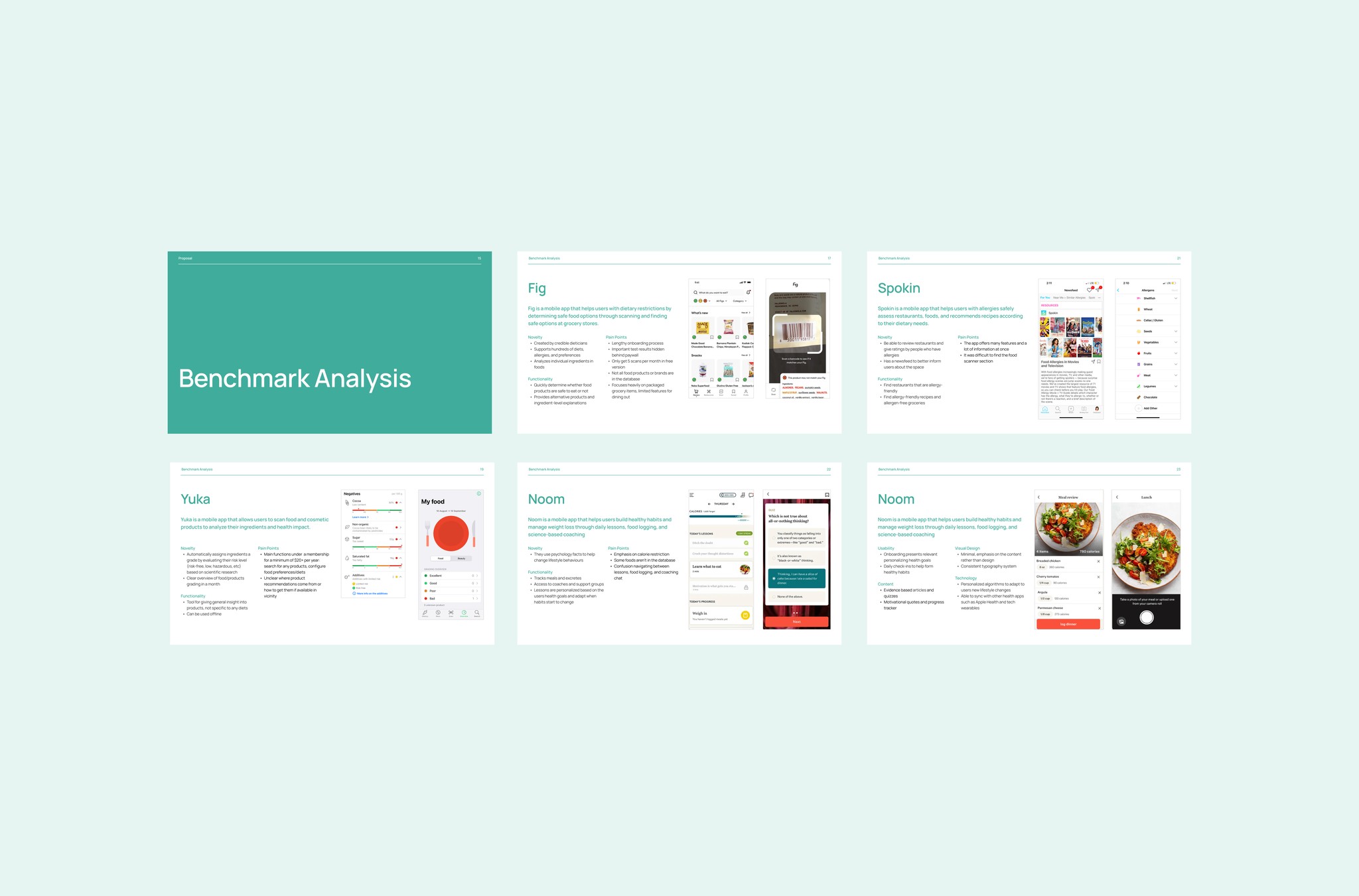
Next, we conducted the benchmark analyses to iterate the opportunities or features.

01

Scan the label (Safe / Avoid / Caution) to learn more using the AI scan.

02

AI meal recommendation for ordering and cooking foods.

03

Behaviour-based nudges/notification and allergen or diet alert system.

04

All in one decision engine that combines health goals, restrictions and whether you're at home or eating out.

Refined Challenge Statement

Solution Statement

An AI-powered companion that provides dietary guidance based on user’s unique needs and goals.

  • Actionable dietary guidance for when, what, and how to eat.

  • Personalized profiles for individuals or families to ease dietary decisions

in the household.

  • AI-driven nutrition tracking, food scanning, and tailored recommendations.

  • Food and health logs to monitor progress and prevent risks.

  • Smart dining, shopping, and cooking support.

Implementation

Design Process

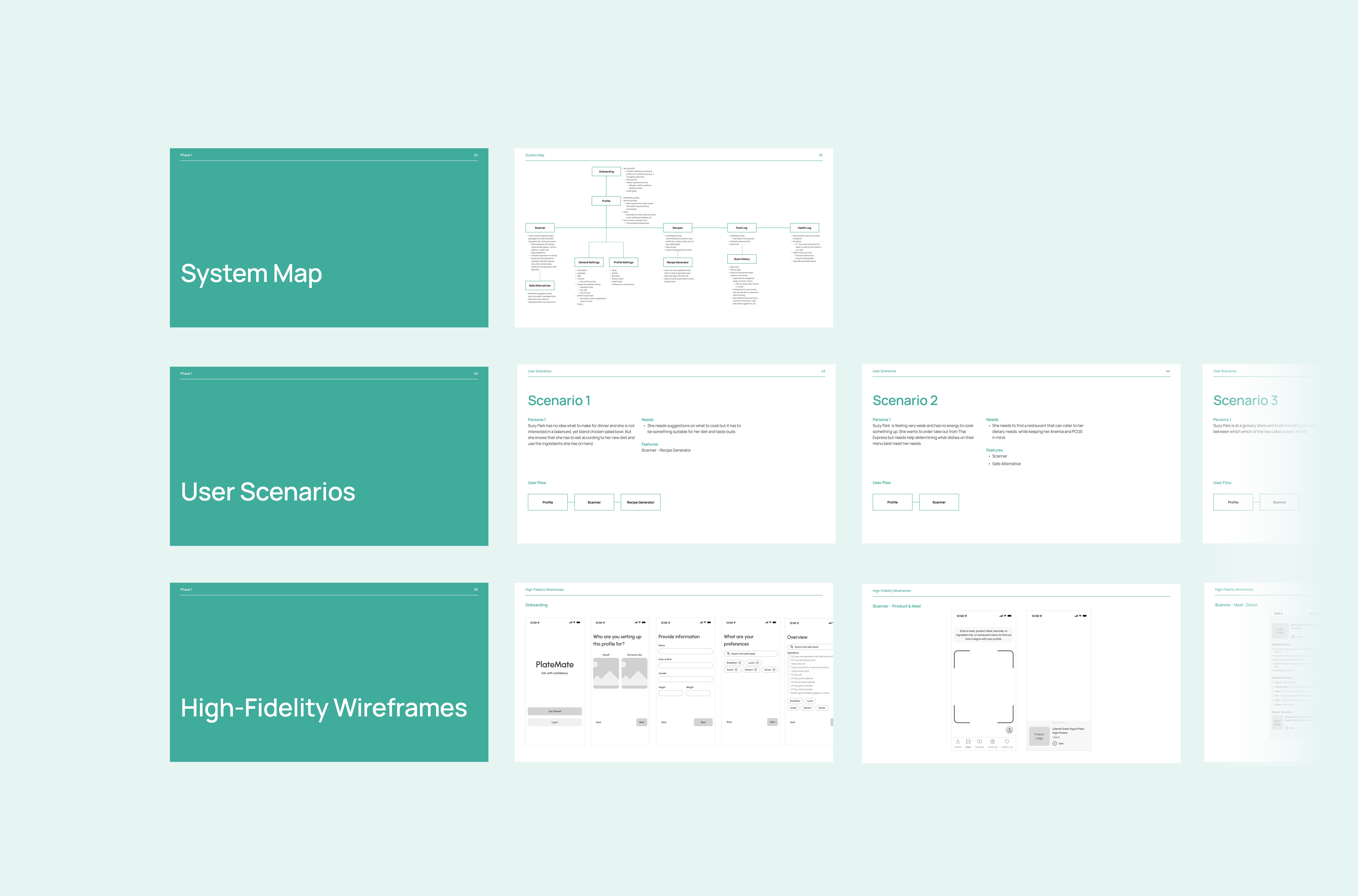
We started by creating a system map and analyzing user scenarios to capture diverse needs, particularly around dietary restrictions and health goals.

These insights informed the design of wireframes for core features, including onboarding, a food scanner, health tracking, and food logging.
Lose weight

Maintain health

Gain Muscle Mass

Plan Meals

Lower Sugar

Optimized Nutrients

Support Training Recovery

Diabetes

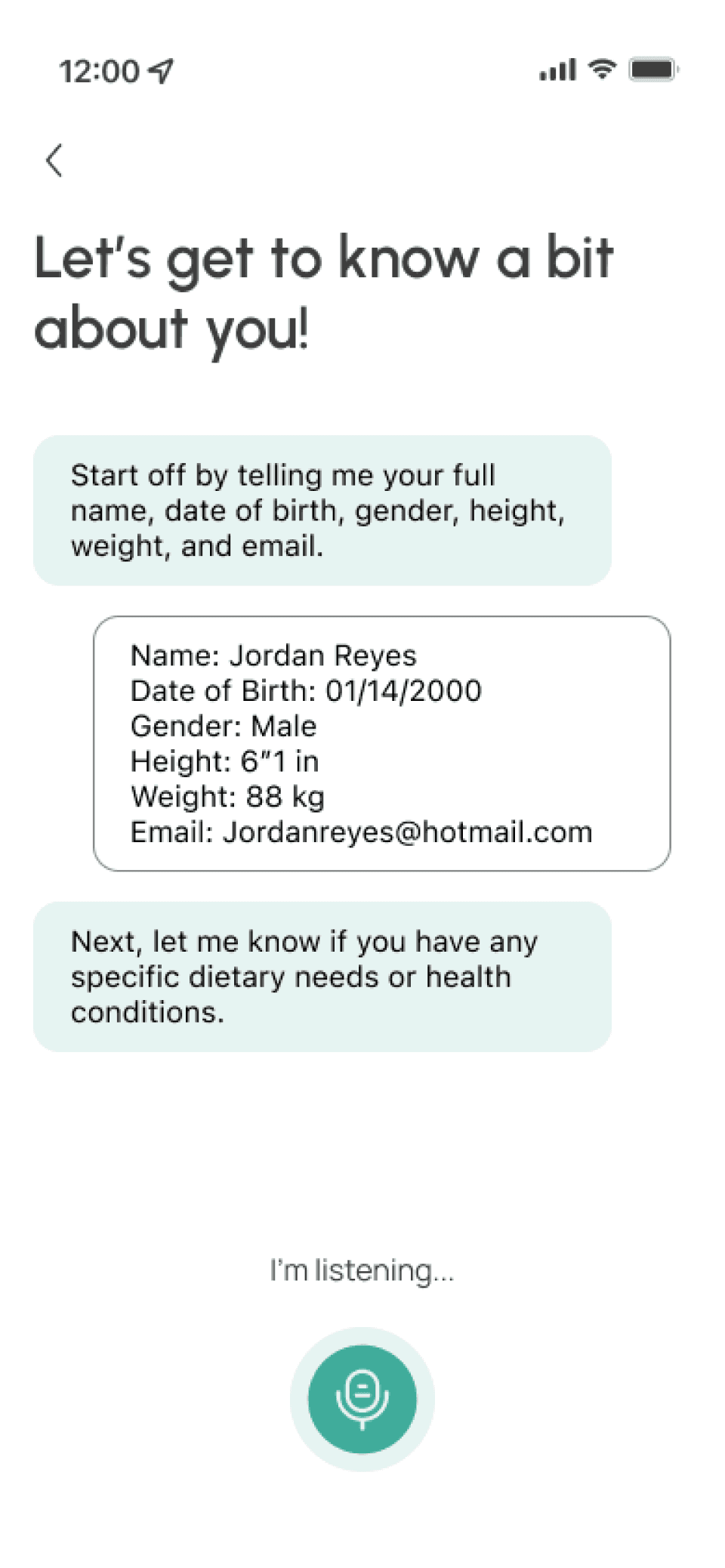
AI Voice Chat

Through voice conversation with AI, users can easily set up their profiles hands-free, making the process intuitive and effortless.

Onboarding Screen

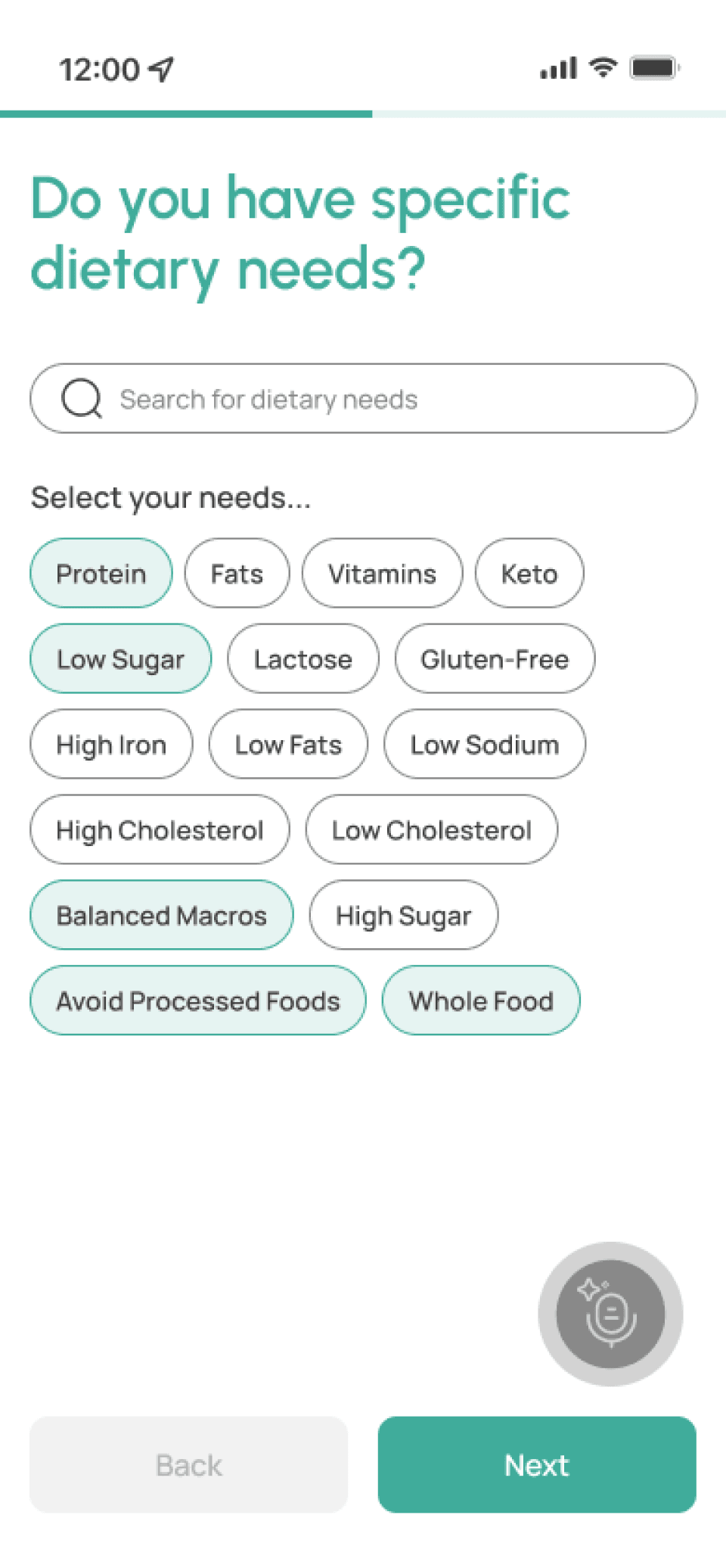
Personalized User Profiles

A simple and fast onboarding gathers essential information about the user’s dietary goals and health conditions to create a tailored nutrition profile.

Scan

Recipes

Food Log

Health Log

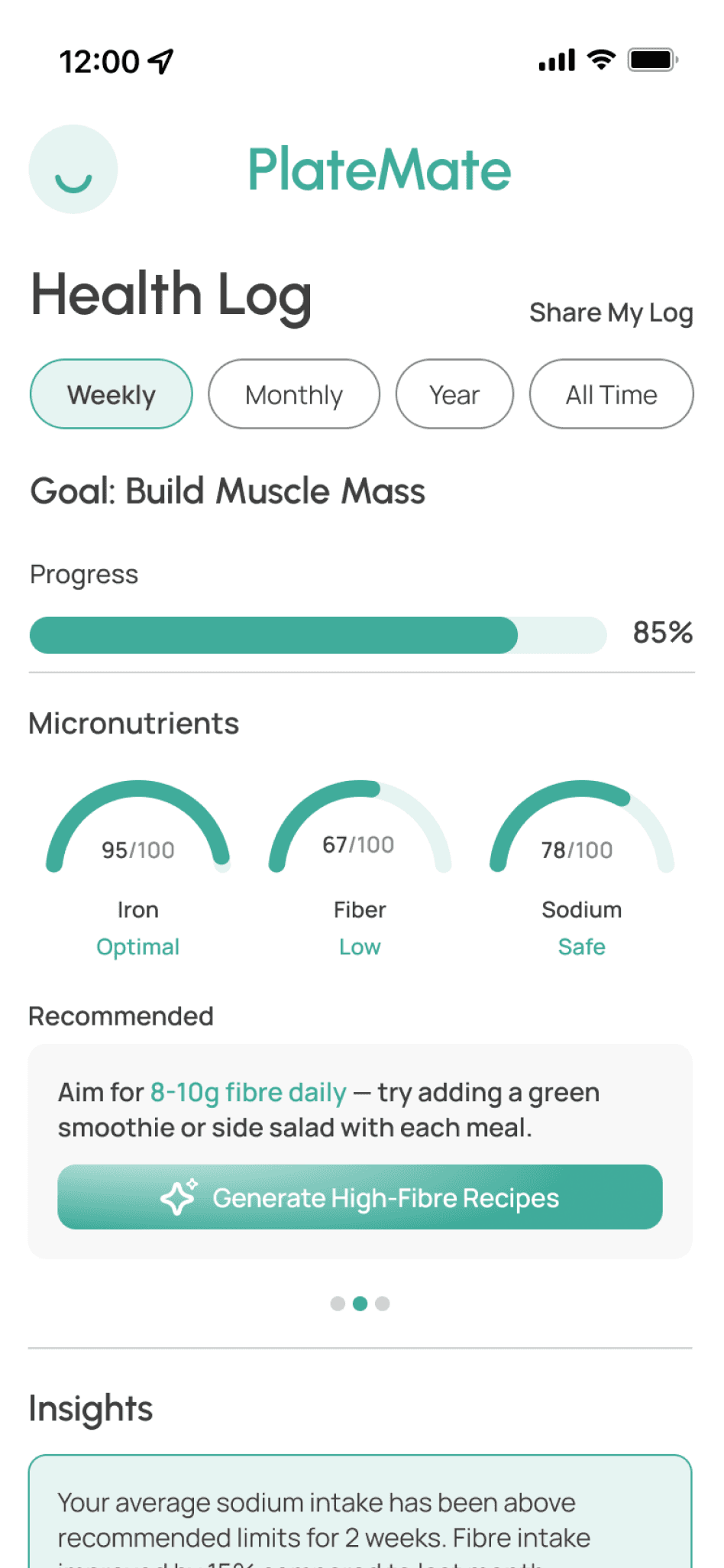
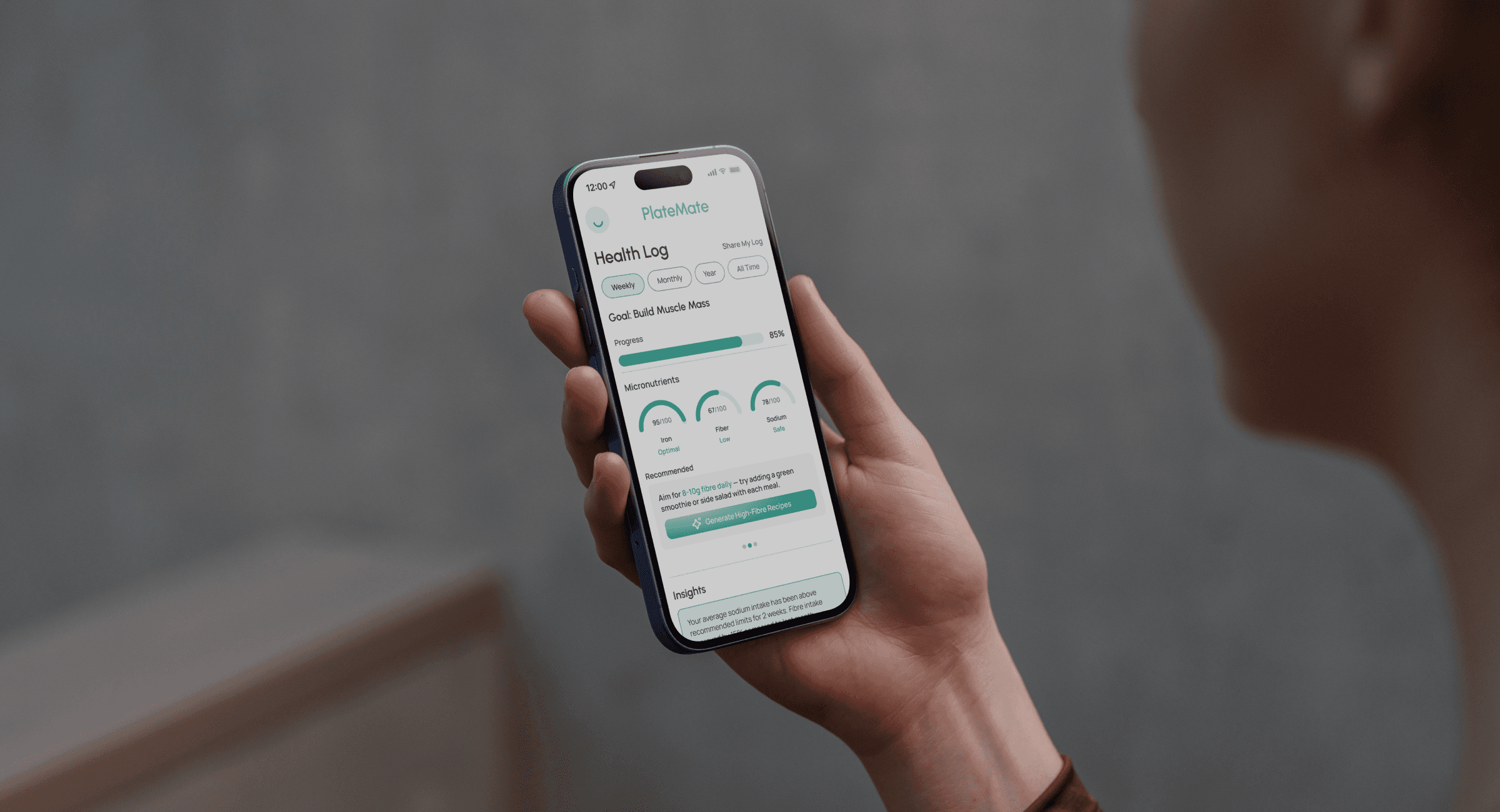
Aim for 8-10g fibre daily — try adding a green smoothie or side salad with each meal.

Generate High-Fibre Recipes

Insights & Recommendation

AI-generated insights and trend suggestions guide users toward healthier daily habits and help prevent potential dietary risks.

Health Log Screen

Health Overview

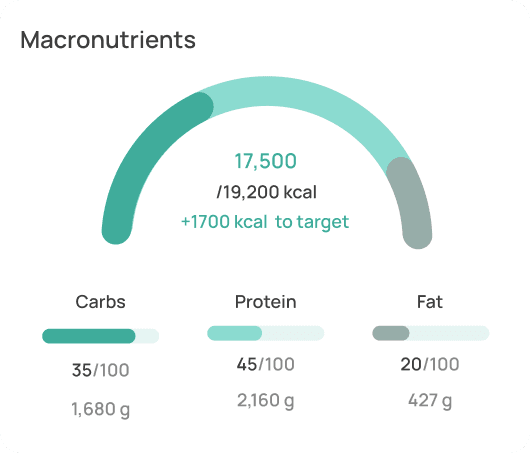
Users can view their goals and weekly progress through clear, engaging visuals.

Scan

Recipes

Food Log

Health Log

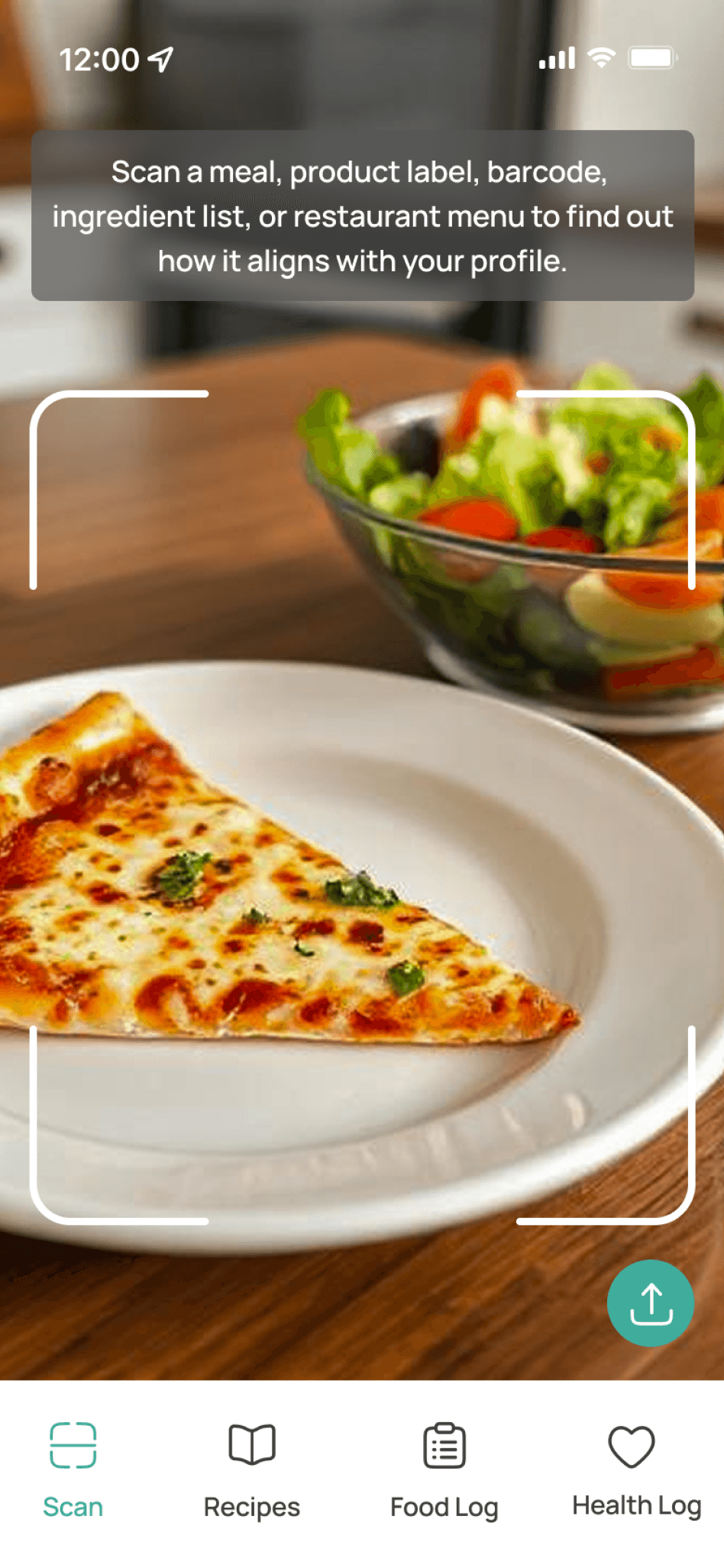
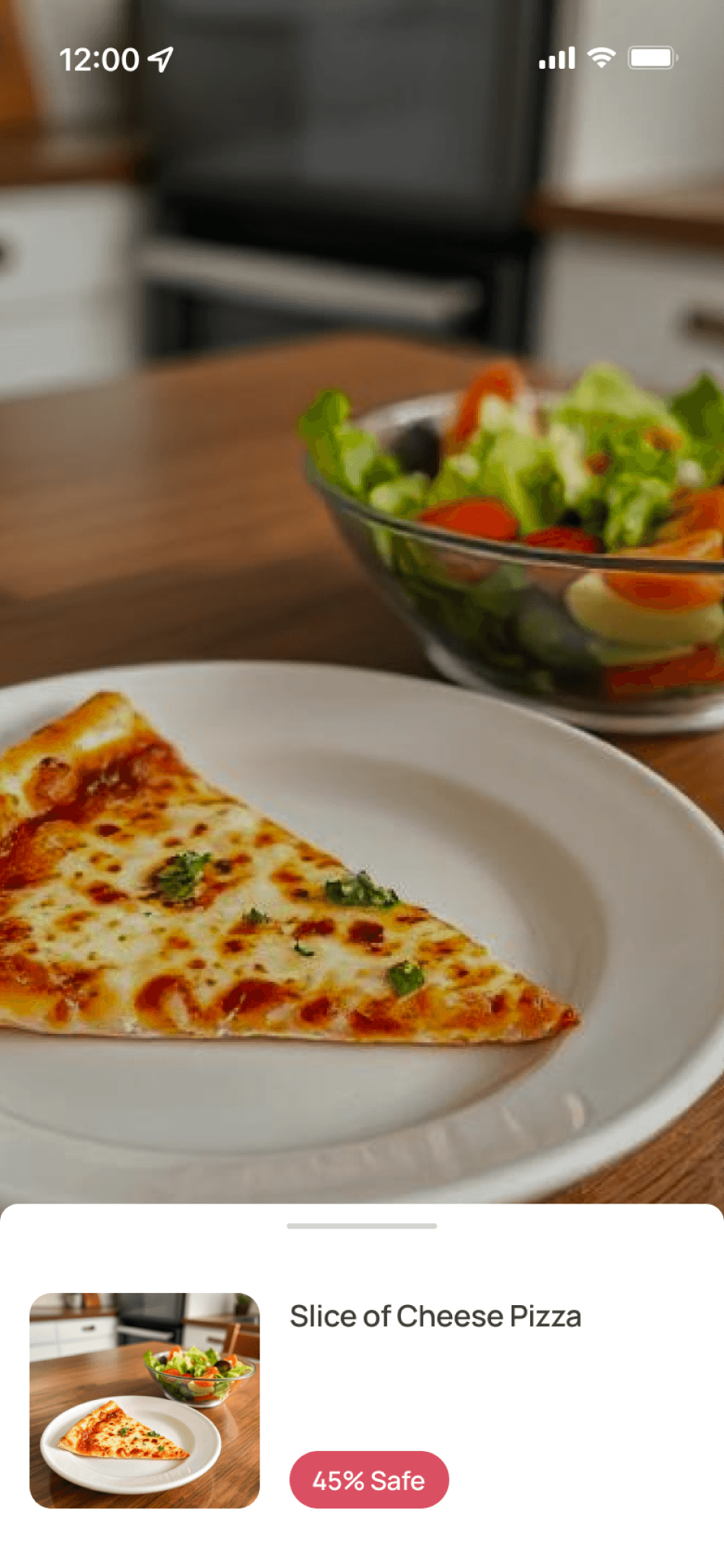
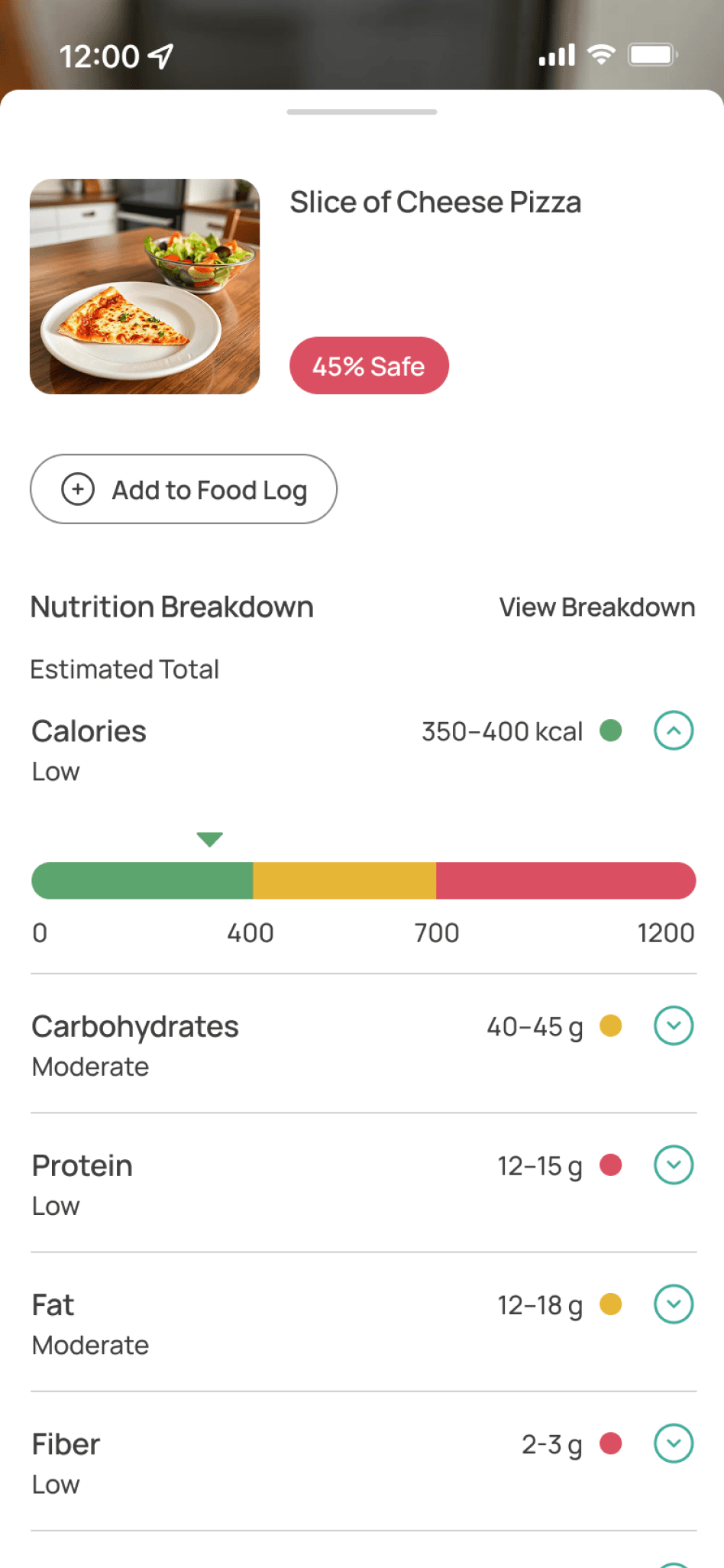
The scan results rate meal suitability for your diet, highlight potential risks with colour-coded indicators, and provide a detailed nutrition breakdown.

Scanner Screens

Scan Anything Instantly.

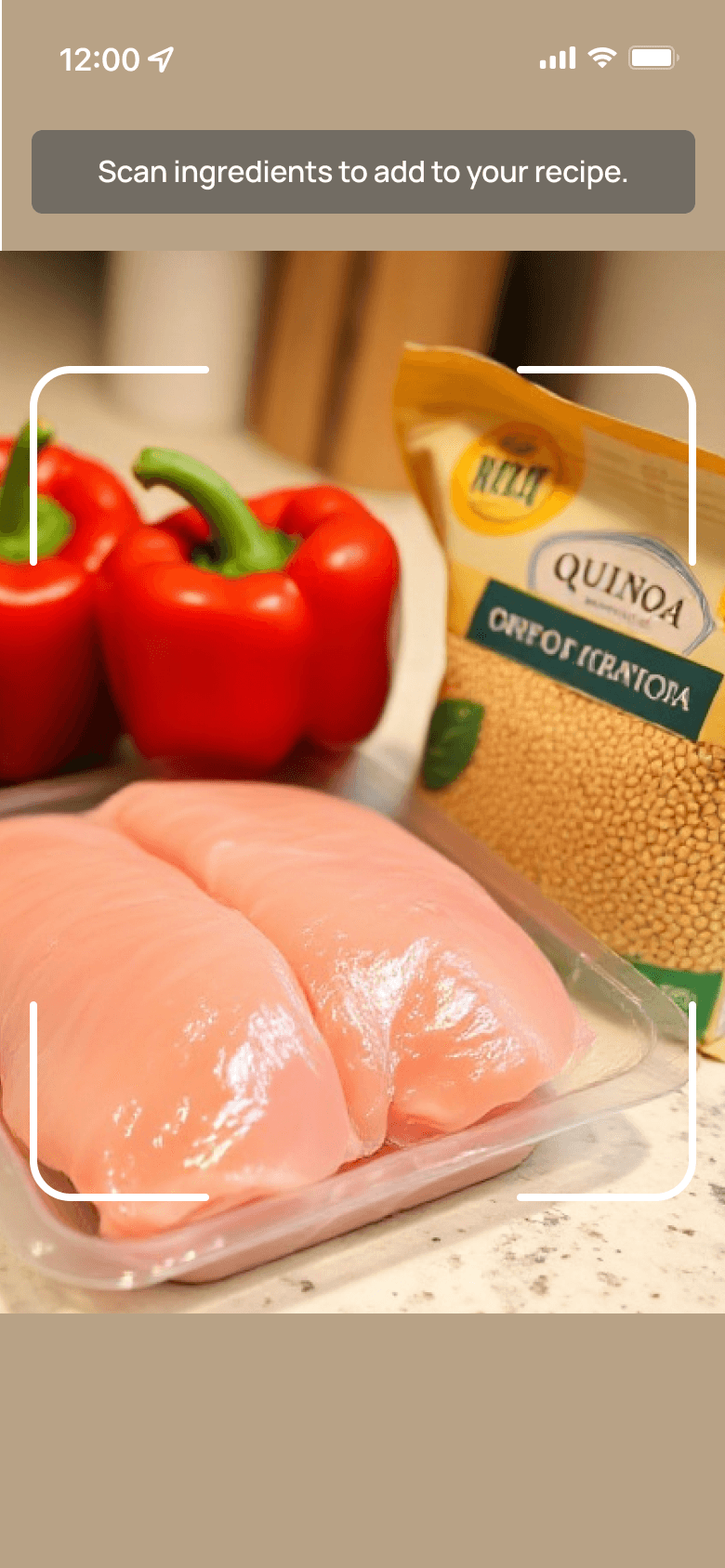
An AI-powered scanner analyzes packaged foods, restaurant menus, and home ingredients.

Stay on track with your daily meals.

Scan

Recipes

Food Log

Health Log

Scan

Recipes

Food Log

Health Log

Add food log

Edit food log

Delete food log

Generate recipes

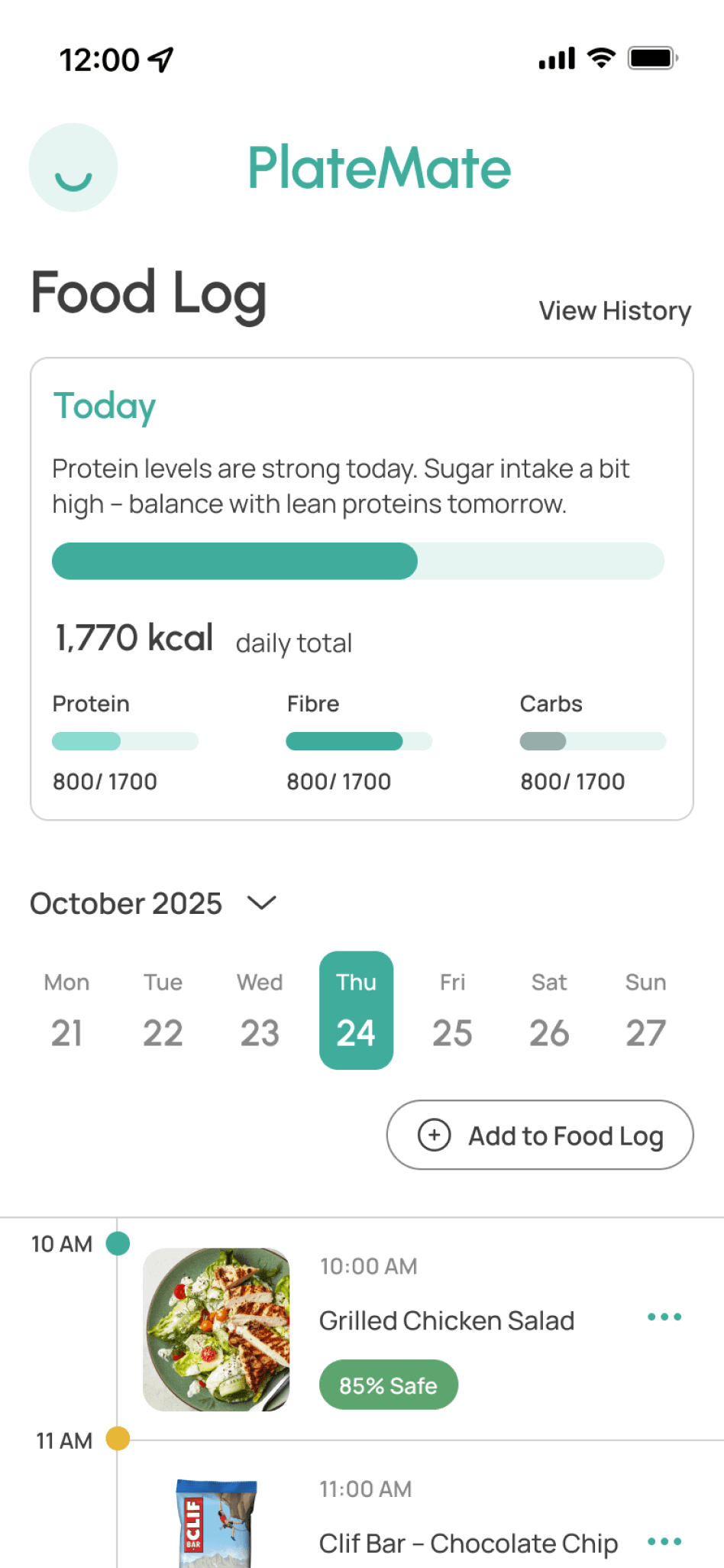
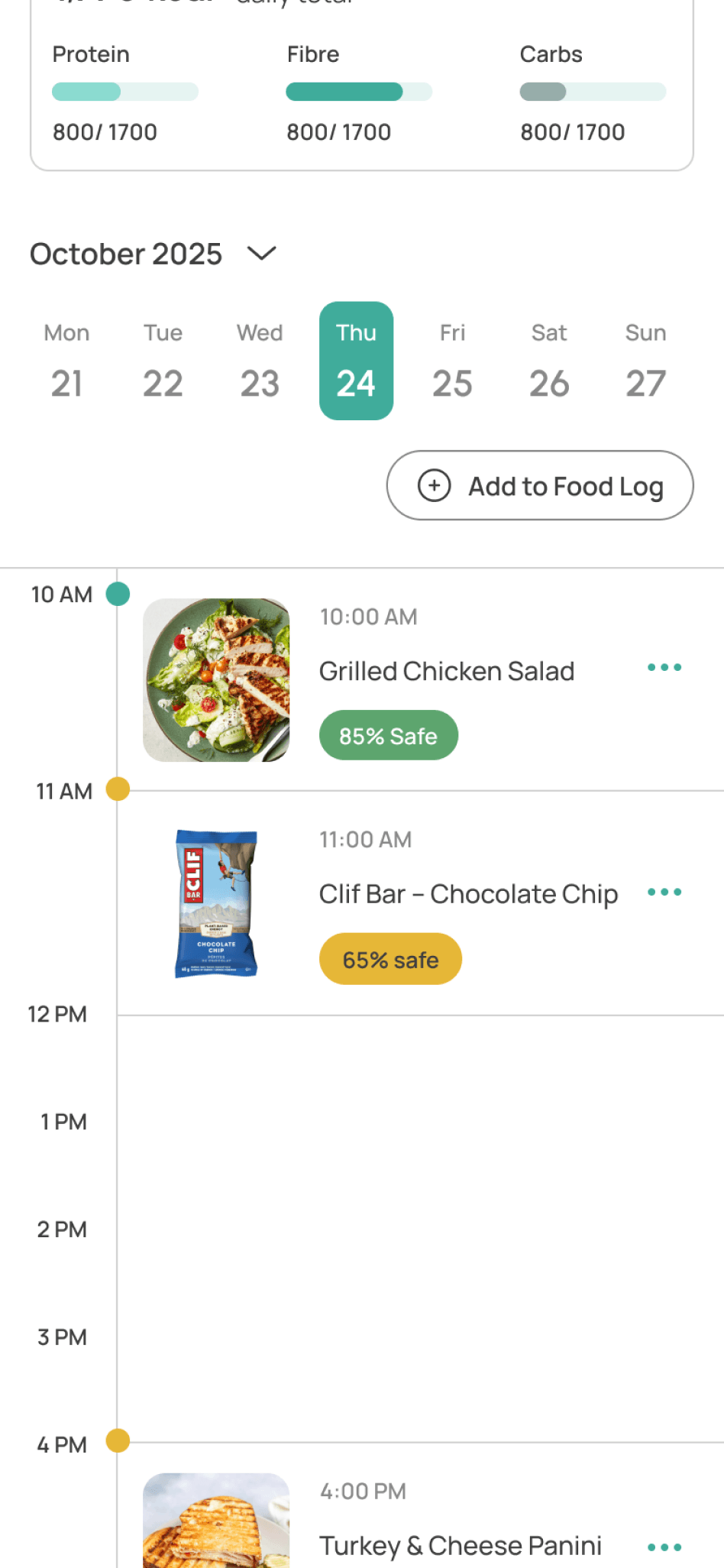
The calendar view helps monitor meal times, and users can add, edit, or delete entries anytime to keep records accurate.

Food Log Screen

Daily Nutrition Log

A scan-based food tracker summarizes nutrition details from what users eat each day.

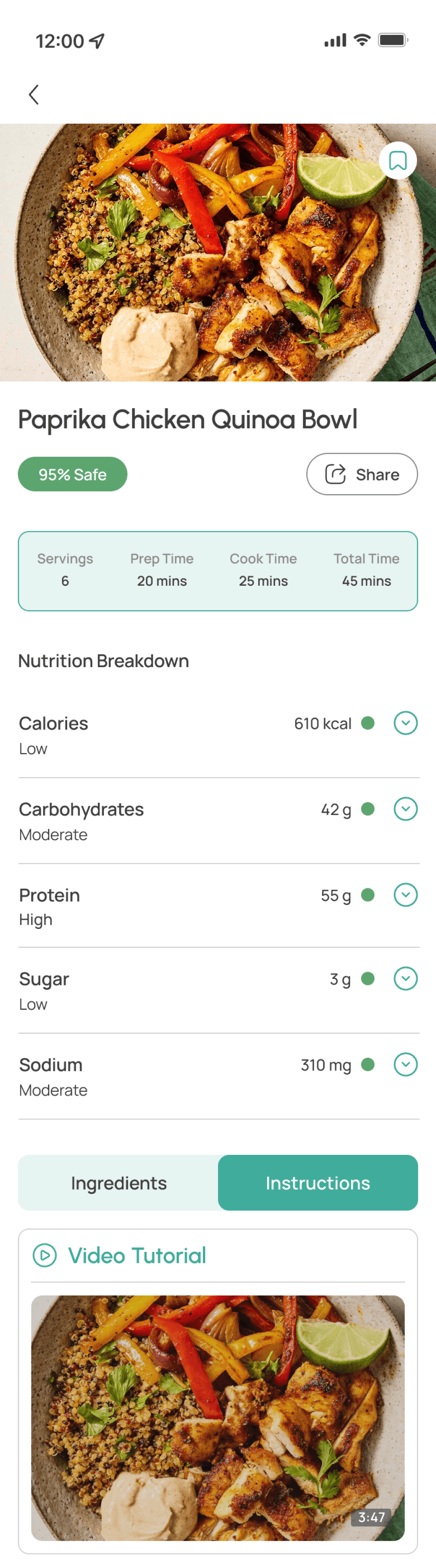
Recipes Detail

Each recipe includes prep time, ingredients, and full nutrition info, along with AI-generated video tutorials for easy step-by-step cooking.

Scan

Recipes

Food Log

Health Log

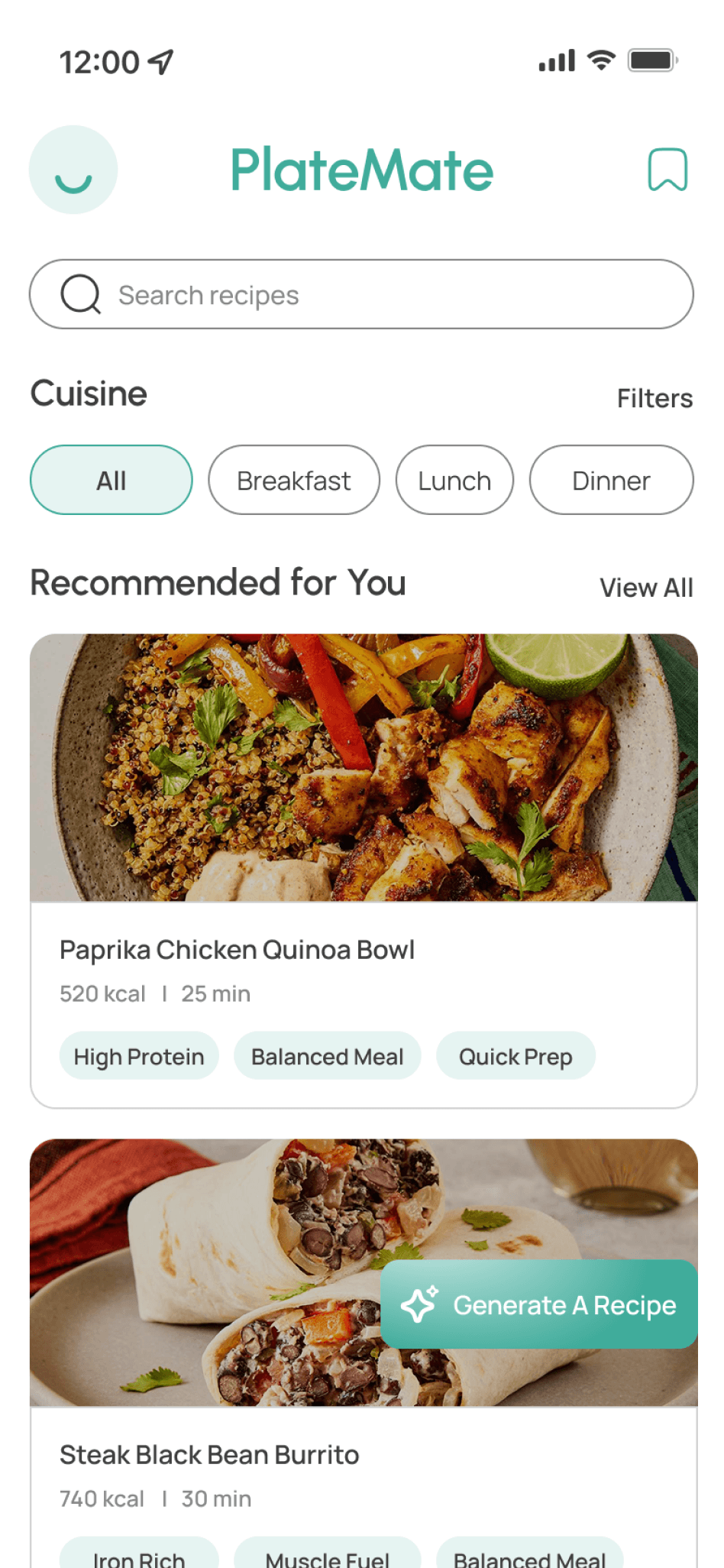
Paprika Chicken Quinoa Bowl

520 kcal

| 25 min

High Protein

Balanced Meal

Quick Prep

Recipes Card

Each recipe card displays calories and cooking time along with key insights such as high protein, balanced meal, or quick prep to help users choose the best fit.

Recipes Screens

Discover Meals Made for You.

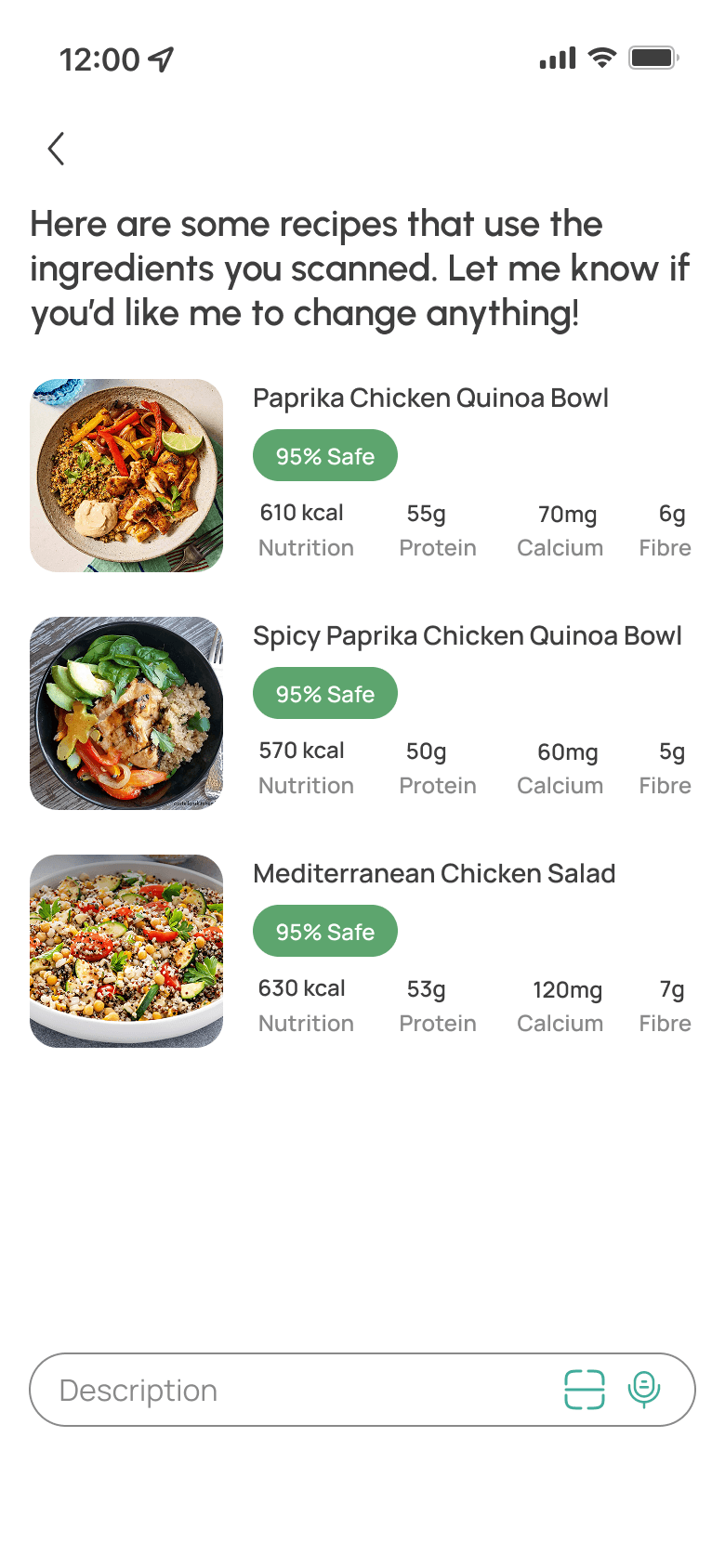
Users can explore a range of recommended recipes tailored to their dietary needs and goals.

Recipes Screens

12:00

I’m listening...

I want something quick, comforting, and Italian with meat.

Recipe Generator Screens

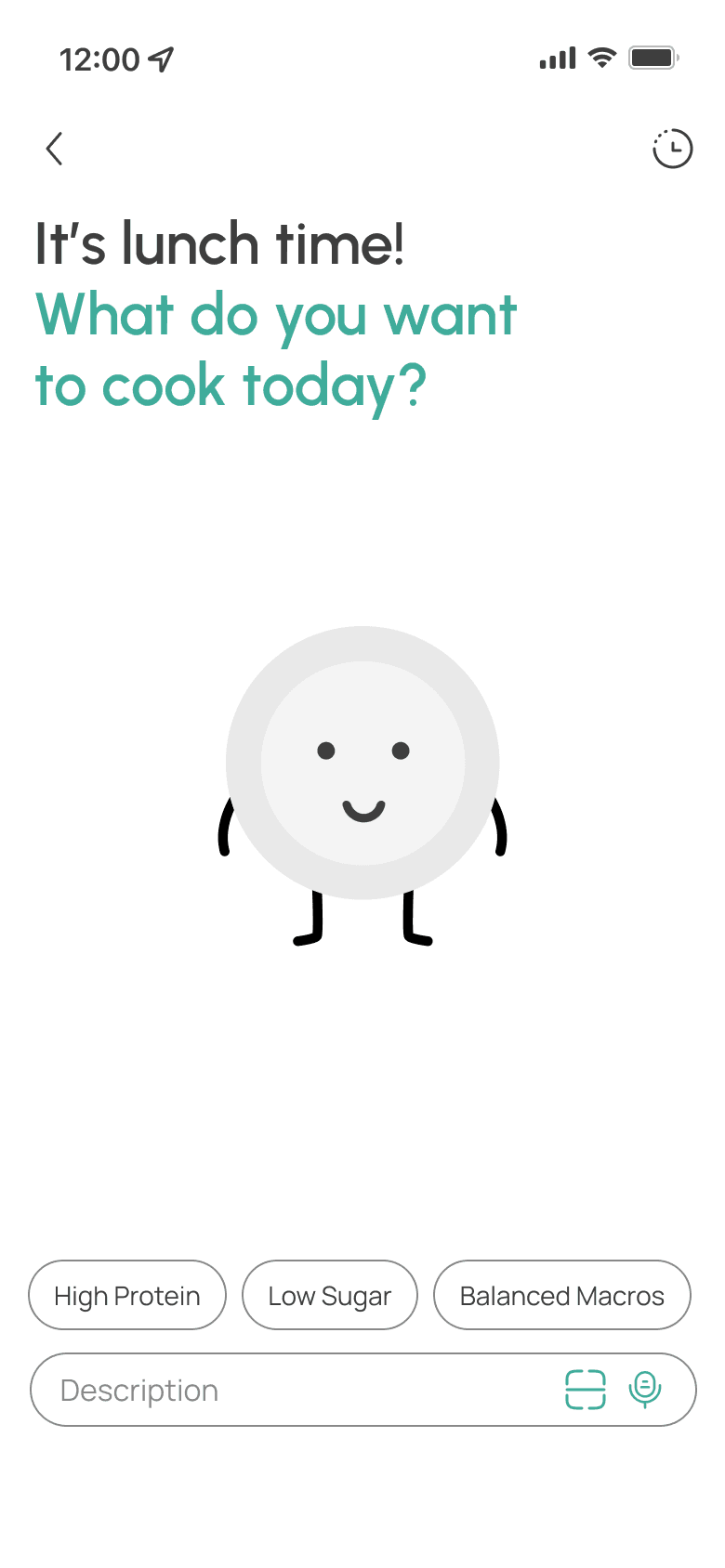
Smart Recipe Generator

The AI creates personalized recipes that match the user’s dietary goals and needs. It reduces food waste and inspire creative cooking.

Users can tell the AI what kind of meal they want or scan what ingredients they have. Both features create a more intuitive and conversational experience.

Description

Your ingredients, auto-planned.

Reflection & Learnings

A key takeaway

What I learned from this project was the value of continuous iteration and user feedback. Each week, we presented our ideas and process, received feedback, and iterated on our work.

With more time, I would expand usability testing across a broader demographic to better understand diverse dietary needs and cultural contexts, as well as observe long-term behaviours such as meal tracking and engagement with AI-generated suggestions. This experience strengthened my focus on designing with empathy, simplicity, and adaptability, and showed how well-designed AI can support user confidence and make everyday decisions easier.

© 2026 Soyoung Studio.

Back to top